Project planning · HiBar Insulation
Coordinate services around HiBar-treated elements
Services and passive fire protection meet at many points in a building. A coordinated plan helps the project team distinguish different systems and avoid unreviewed changes.

Identify each system’s role
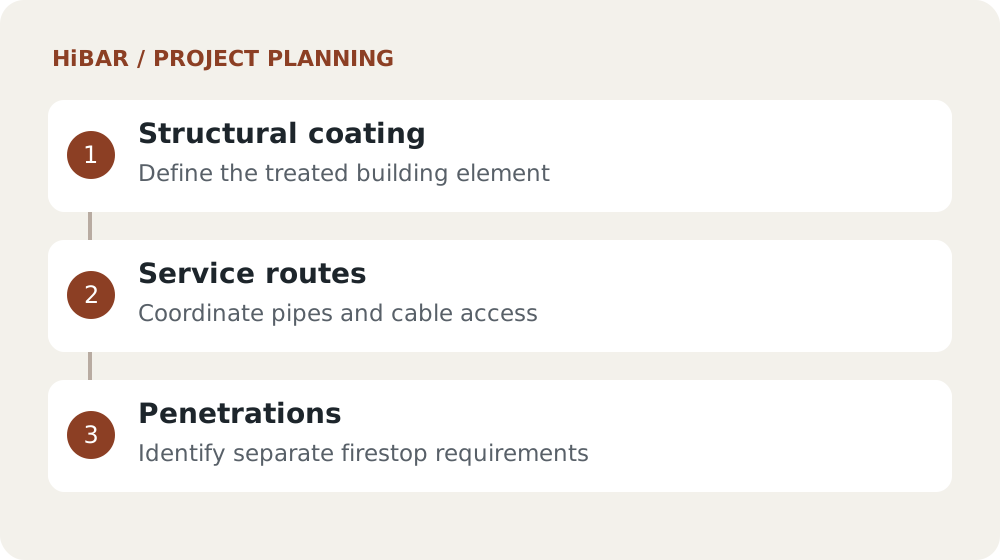
Show the treated structural elements, services and penetration locations together. Ask the designer to identify any separately specified firestopping or other protection. Do not assume a spray-applied treatment is a substitute for every system at a junction.
Plan work before and after application
Record which supports and service activities must be completed first. Agree how later work will protect the treatment and report damage. Include maintenance access and equipment replacement routes in the discussion.
Keep changes visible
Require altered penetrations, supports and disturbed surfaces to be reviewed through the project’s change process. Retain the accepted detail and any repair record. This gives future trades a usable reference rather than an undocumented patch.
Keep with your project brief
- Coordinated systems drawing
- Trade sequence
- Change and repair records
Sources and editorial note
Published by Industry Army Marketing (IAM). Updated September 28, 2026. This is an independent project-planning article, not an installation specification. Confirm product and assembly requirements using current manufacturer documents and the responsible project professionals.
Questions before your enquiry
What should I know about identify each system’s role?
Show the treated structural elements, services and penetration locations together. Ask the designer to identify any separately specified firestopping or other protection. Do not assume a spray-applied treatment is a substitute for every system at a junction.
What should I know about plan work before and after application?
Record which supports and service activities must be completed first. Agree how later work will protect the treatment and report damage. Include maintenance access and equipment replacement routes in the discussion.
What should I know about keep changes visible?
Require altered penetrations, supports and disturbed surfaces to be reviewed through the project’s change process. Retain the accepted detail and any repair record. This gives future trades a usable reference rather than an undocumented patch.
Does this article replace a project specification?
No. Use the current manufacturer documents and the responsible project professionals to confirm the product, assembly and inspection requirements.
Who should I contact about a Lower Mainland project?
Open the city directory to contact Performance Spray Insulation. Confirm the work and availability directly. General editorial enquiries go to build@buildershaus.com.
Last updated: September 29, 2026. Change log: added project FAQs, sharing metadata and Lower Mainland contact navigation.